Follow the connections
Alternative, evidence & scoring rule
Sources · checked September 8, 2026
↑ broader · ↓ deeper · ← → adjacent · backward / forward = dated thread
A glimpse forward. Follow a prediction up to its theme, or down into the evidence.
A sci-fi revival, a robot lesson, a drone built before your eyes, and AI agents working together. Five more chances for the next fortnight to surprise us.
15 active forecasts · 53 illustrated points · one crystal ball. These are guesses about observable events, not guarantees that they will dominate the news. What changed · Experiment protocol · Scorecard
Photographs from the world, imagined scenes for its possibilities. Every point has an image. Explore all 53 images and their sources ↗
This earlier branch was retired when the scope changed. Explore a current forecast below.
Select a light or its label. All three layers share one sphere.
Later events dim as you move back. Results are not simulated.
↑ broader · ↓ deeper · ← → adjacent · backward / forward = dated thread
Select an outcome, a driving theme, or a detail to explore its place in the orb.
No matching points.
Nine connected chapters through the orb. This script is unrecorded. The old audio has been retired at the owner’s request.
Save the new script ↓
Come closer to the crystal ball and choose a gold light. Before asking whether its story feels plausible, ask what would make it wrong. A folding iPhone is a useful starting point because you can separate the invitation to an event from the product you hope to see. The invitation establishes a stage. It does not establish what will appear on it. Our test asks for an official introduction of a display that physically folds. It does not count a patent or a clever accessory.
Now turn toward the AI helper. Its test concerns the published purchase-approval requirement, not a claim that every action is safe. You have moved from a product milestone to a permission boundary, while keeping the same discipline: name the observable result before it happens. The source tells you what the company says. Independent testing would be needed to show how reliably the system behaves.
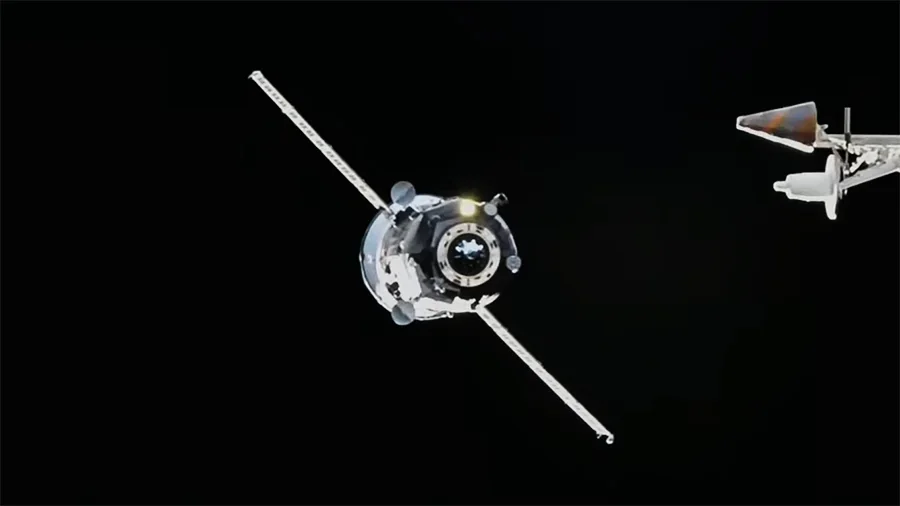
Imagine an orbital sunset and a small cargo vehicle approaching the station. The image makes the destination feel close; the schedule may tell another story. NASA’s current Progress 96 page marks its timing under review. An earlier plan named dates, but those dates must now be qualified. This is how a careful forecast changes its confidence without inventing a technical explanation.
Move across to Crew-13. A no-earlier-than window is a boundary, not a reservation. Our guess is that the crew mission has not lifted off by September 22. Notice how the two tests differ. The cargo branch asks for completed docking; the crew branch asks whether liftoff has occurred. You cannot score either one from an impressive rehearsal or a new target date. Each needs the actual milestone, with its own timestamp.
The light changes from orbital blue to the warmth of an awards stage. The Pitt and Hacks have broad nomination recognition, which makes them reasonable favorites for this exercise. But recognition across many categories is not a hidden count of final votes. Sixty percent leaves plenty of room for another nominee.
Before the ceremony, give the strongest rival a fair hearing. What could concentrate support around a different show? You do not need to know the answer to admit that the missing ballot information matters. After the ceremony, use the exact series category. An acting award cannot quietly become a win for our drama or comedy forecast. Both predictions draw on a similar signal, so two correct picks would still be a small, partly related result.
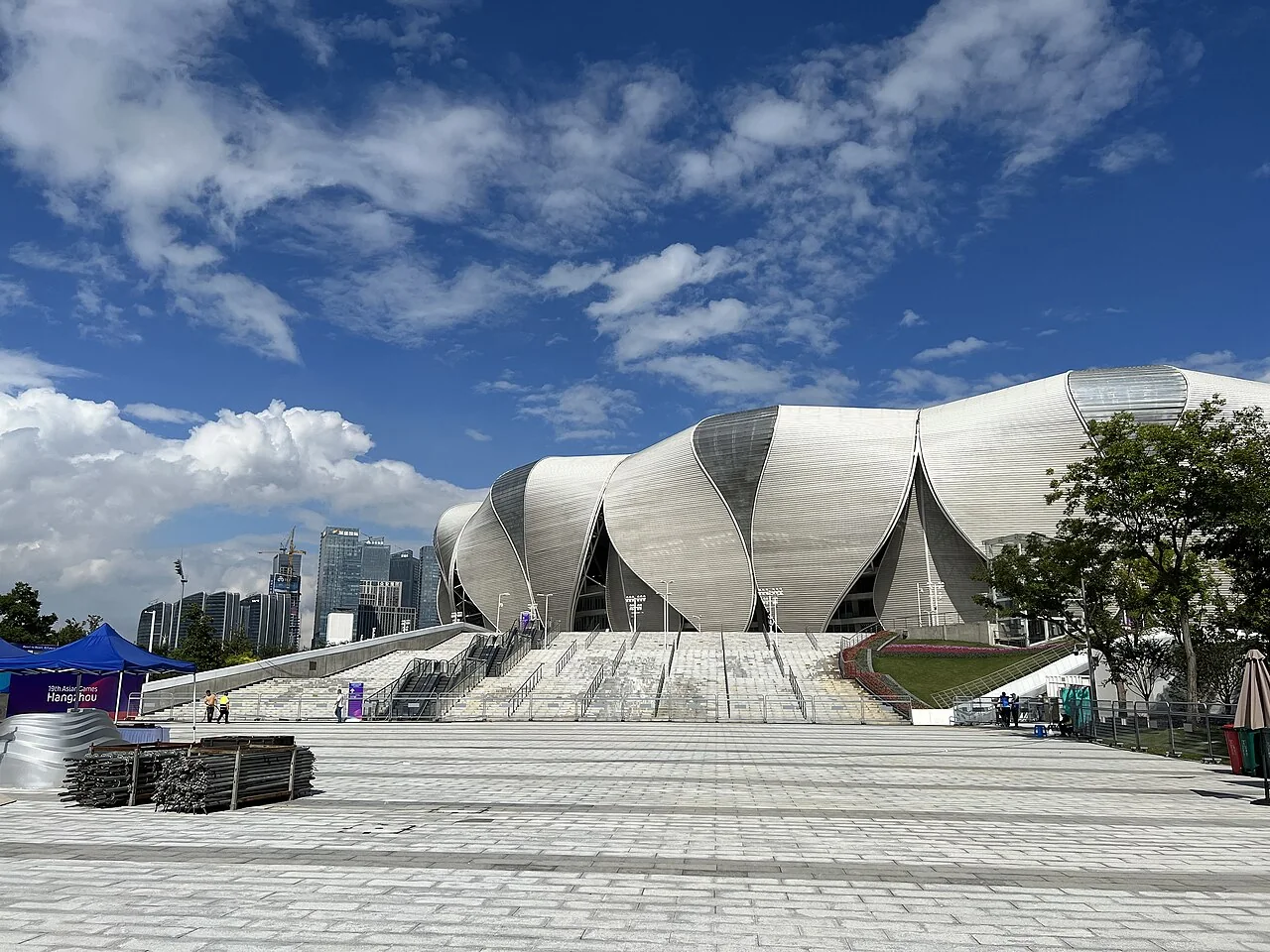
Look now at the sports lights. Historical strength can support an expectation about a medal table, but the first few days may favor a different team because of the event schedule. A full-tournament record and an early-table snapshot are not interchangeable. Our Asian Games call stops at September 22 and uses the stated medal tie-break rule.
The US Open branch asks a smaller, more playful question: will the men’s final finish in at least four completed sets? The format allows it, but that fact is not a probability model. Last year’s four-set final is only one example. A fair record therefore preserves the modest estimate and its limitations. Retirement is left unresolved under this rule, because a partial match does not answer the intended question about a completed final.

Return to Earth and two numbers with practical consequences. A monthly core-price reading describes a national statistical basket. It does not tell you exactly how your own bills changed. The original prediction specifies the initial rounded release, so a later revision cannot move the scoring target.
The Atlantic branch has an equally important boundary. It asks whether a new cyclone designation appears within a short interval. A quiet formation outlook does not promise safe weather at a particular place. The retrieved outlook has its own issue time, and this saved orb does not fetch new warnings. For real decisions, turn to current official guidance. For this learning experiment, keep the original estimate and record the operational advisory evidence that resolves it.
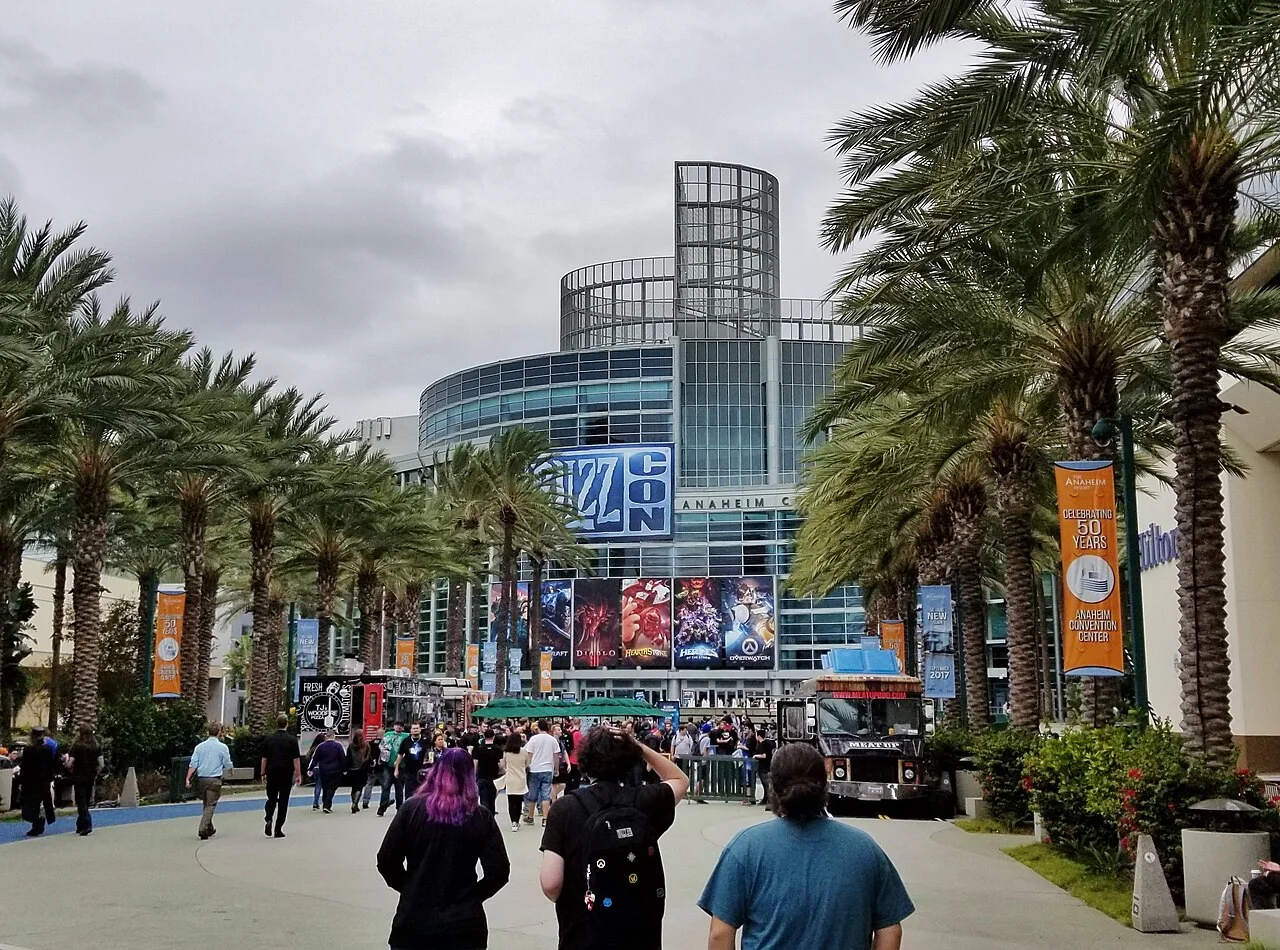
Turn toward the lights where imagined worlds begin. StarCraft carries the pull of a familiar name, but an unusual website is still an ambiguous signal. Our new-game test refuses to turn a crossover, remaster or unexplained teaser into a win. You can enjoy the suspense while keeping the category firm.
Project ZIRCON begins from a different kind of evidence: an announced demonstration. Here the uncertainty is whether the presentation delivers actual play. Pause with that distinction. One forecast anticipates an unconfirmed product; the other anticipates fulfillment of a published plan. Their probabilities should not be mistaken for equally daring glimpses of the future.
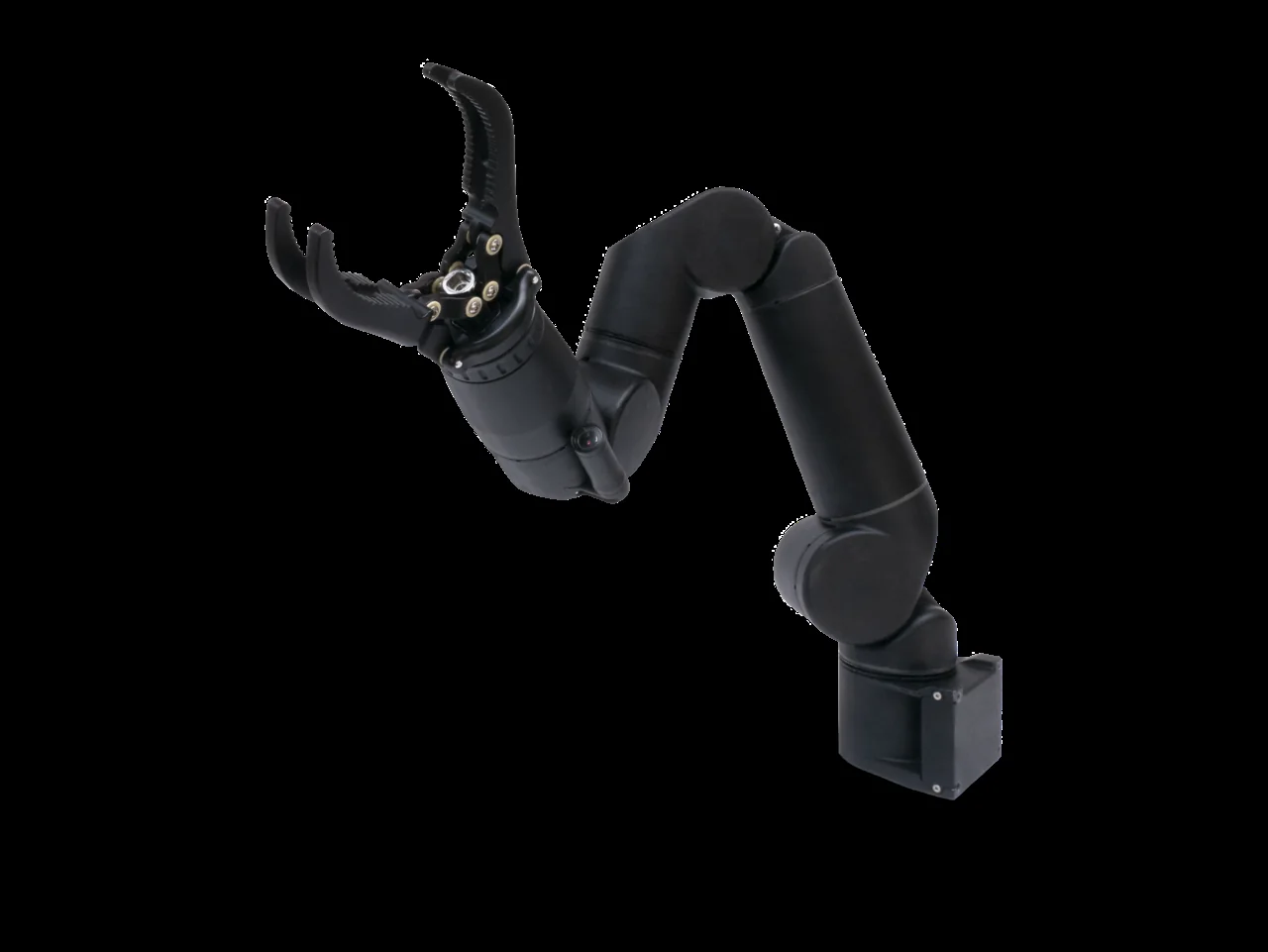
Let the imagined world dissolve into a busy exhibition hall. A robot arm waits beside a person; a small aircraft waits beside a production cell. The intriguing moment is the connection between steps. Did the lesson shape the robot’s action? Did the manufacturing cell produce the drone that flew? Our tests require those connections to be documented.
Now look for the people around the demonstration. Someone may arrange the objects, correct a failed attempt or finish an integration step. Their contribution belongs in the account. A successful demonstration can still be valuable with human assistance, provided you describe it accurately. What remains unknown is performance across many attempts, unfamiliar situations and a full working day.
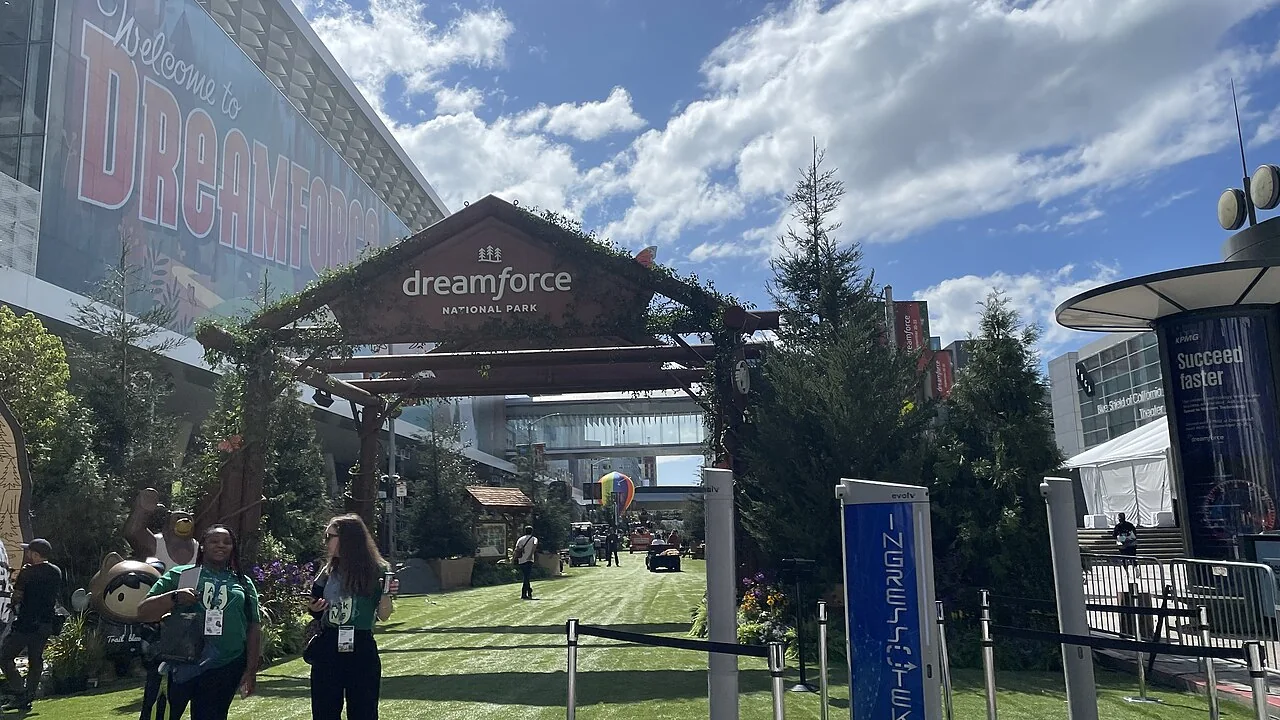
Return to the screen with the same attention to hidden work. Two agents in a diagram do not yet show cooperation. Trace a task from one identifiable role to another, then look for its result. Our Dreamforce test asks for a visible handoff, while allowing a prerecorded product demonstration if the resolution labels it honestly.
Connect this to the older permission branch. Giving software more ways to cooperate also raises questions about who can authorize an action and who can stop a mistake. A polished example does not settle those questions. The useful next experiment would introduce an error and observe recovery. For now, keep the demonstration claim small enough to check, and its implications open enough to investigate.

Step back until the whole sphere fits in your view. Themes sit above, guesses cross the middle, and evidence with open questions rests below. The lower points are useful precisely because they show where the research stops. You can continue a branch without pretending the missing knowledge was already present.
When the window closes, keep every result: yes, no, provisional or unresolved, each with a source. One simple score is the squared distance between your probability and a binary outcome. Lower is better, but fifteen selected cases cannot establish calibration, AGI or access to the future. Separate the ten retained calls from the five newest additions, while preserving each earlier batch and cutoff. The change of scope is part of the record, not something to hide.
The crystal ball remains a playful invitation. Its useful gift is a habit: define the claim, look for the strongest contrary evidence, mark the uncertainty and return honestly to what happened. Leave the orb with a sharper question, and leave room for the world to surprise you.
Ten unscored health, weather and discovery companions retained or updated for Edition 03. Original research snapshot September 8 at 19:00 PDT; the orbital-delivery item was updated at the new edition cutoff. No live alerts.
10 storiesSeptember 8, advisory 51 at 11 a.m. HST · Official weather advisory
NHC/CPHC describes Lowell weakening and moving northward. The NHC page still flags a flash-flooding threat in the Hawaiian Islands.
Storm category alone does not describe rainfall, surf, damaged roads or recovery needs. This saved orb is not a current emergency-warning service.
Improving conditions could allow restoration work; lingering rainfall and damage could keep travel and services disrupted.
Current Honolulu/NHC advisories and local emergency instructions. Use their current issue times, not this snapshot, for safety decisions.
September 8; outlook September 11–15 · Official weather outlook
WPC’s September 8 extended outlook describes lingering late-summer heat in the southern Plains. Its short-range discussion also identifies rainfall and thunderstorm risks elsewhere.
Heat stress, electricity demand and flood disruption can matter before they become national headlines. Regional outlooks do not predict conditions at every address.
A change in the weather pattern could ease heat; overlapping hazards could strain local services.
Updated local forecasts and warnings, observed impacts and restoration reports. The cited outlook’s dates are shorter than the full orb window.
September 8 · AP reporting
AP describes severe damage to homes, roads, bridges and hydropower after Nepal’s August floods, testing its new government.
The flood occurred before this forecast window. Rescue, displacement and infrastructure recovery can nevertheless change people’s lives during it.
Restored transport and electricity would mark improvement. Continuing access problems could slow relief and economic recovery.
Verified rescue and recovery updates, reopened routes and functioning power infrastructure. Avoid treating preliminary loss estimates as final totals.
September 8 · AP reporting; recovery underway
AP reports that flights resumed at Jakarta-area and regional airports following volcanic ash closures.
Reopening does not guarantee every flight will operate or that volcanic hazards have ended. Older closure reports can circulate after conditions change.
Stable operations could reduce disruption and help stranded travellers. New ash could force restrictions again.
Current airport and airline notices, official volcanic advisories and actual flight operations. Do not invent a new eruption prediction.
August 28 report; data through August 26 · WHO outbreak and emergency reports
WHO reports geographic expansion of the Bundibugyo virus disease outbreak. Its emergency committee report says the event remains a public health emergency of international concern, while not meeting the pandemic-emergency criteria.
WHO identifies gaps in response coverage, access and community trust. An international emergency designation does not mean a pandemic is inevitable.
Stronger detection, care and community-led response could improve control; disrupted services could undermine it.
New WHO and national updates with clear reporting periods. Separate reported cases, surveillance changes and evidence about transmission; do not project a fourteen-day case count from one headline.
September 4 · WHO validation
WHO has validated Bhutan’s elimination of dog-transmitted human rabies. This is a confirmed achievement before the orb window.
Elimination of a defined public-health problem is not a claim that surveillance can stop or that all related risks everywhere have disappeared.
This is a constructive counterweight to crisis-only attention: sustained public-health work can produce measurable gains.
Implementation and surveillance updates. Count the existing achievement as context, never as a prediction made after the fact.
September 3 · Company release plus attributed public claim
Axios reports that OpenAI’s Brockman believes Astra reaches AGI. OpenAI’s launch page describes new capabilities and evaluation results.
A capability claim, a benchmark result and reliable prediction of open-world events are separate propositions. This small, selected, AI-assisted set cannot establish AGI or foreknowledge.
More capable tools could improve research and forecasting discipline. Whether they improve forecasts needs prospective comparison across many cases.
Independent evaluations, repeatable tasks and all resolved forecasts, including misses. These eight calls are an exploratory case study, not a controlled AGI evaluation.
September 8 · Company announcement and safety design
Meta has announced Muse, a personal agent designed to take actions across services. Its safety paper describes boundaries on those actions.
Delegated access brings questions about consent, privacy, mistaken actions and malicious instructions. Described safeguards are not proof that failures cannot occur.
Successful deployment could change everyday scheduling and project work. Reliability problems or restricted access could slow adoption.
What users can actually access, reproducible completed tasks, documented failures and permission controls. Distinguish a launch demonstration from dependable use.
Event September 9 · Official calendar
Apple’s developer newsletter confirms a special event on September 9. The calendar alone does not confirm any rumoured hardware, price or shipping date.
A compelling rumour can quietly turn into an assumed fact. Announcement, preorder and delivery are three distinct milestones.
A new product or software capability could change consumer choices; a narrower launch could disappoint expectations.
Apple’s actual announcements, regional availability and shipping terms. Record what is delivered by September 22 separately from what is merely promised.
September 8 · Official mission pages
NASA’s current Progress 96 event page marks the timing under review. An earlier release describes the planned supply delivery to the ISS.
Earlier dates must not be presented as confirmed after the schedule changes.
A completed delivery would support life and research aboard the station. Our UAP motif is playful design, not a claim of unidentified technology.
The revised timetable and an actual docking confirmation.
What is fixed: each point carries its saved forecast cutoff. Ten retained calls keep their earlier cutoffs; five new headline possibilities use Edition 04’s cutoff. The next fourteen calendar days are September 9–22 inclusive. Event dates use the organizer’s local date. Each scoring rule states its own cutoff where needed. Use each explicit rule for delays and cancellations; by-deadline spaceflight calls have different rules from an unfinished sporting final.
What the colors mean: lavender points are interpretive drivers; gold points are outcome guesses; blue points contain cited observations, assumptions, and knowledge-floor questions. Connections express a reason to investigate, not proof of causation. The lower floor marks the limits of this edition’s research, not a universal limit of knowledge.
How to update fairly: preserve this edition and its probabilities. Gather the dated outcome source, apply the original rule, and label YES, NO, provisional, or unresolved. A later forecast should be a separate revision. Probabilities are deliberately coarse; this set has not been statistically calibrated. Selection favors scheduled events with observable outcomes and is not a comprehensive ranking of world importance.
Reading and continuation: the downloaded folder includes everything needed to browse, including its image files. Source links need internet access. “Build on this point” provides a prompt to take into your ORB conversation; this static page does not call an AI or automatically monitor events. The nine-chapter ORB Learn script is unrecorded. Old recordings have been retired at the owner’s request.